 English
 Portugal
 España
CHINA TOURS
A cordial welcome by our English-speaking local representative who coordinates your ride to the hotel. After checking in, remainder of the day is free at leisure and adapt to the high altitude.
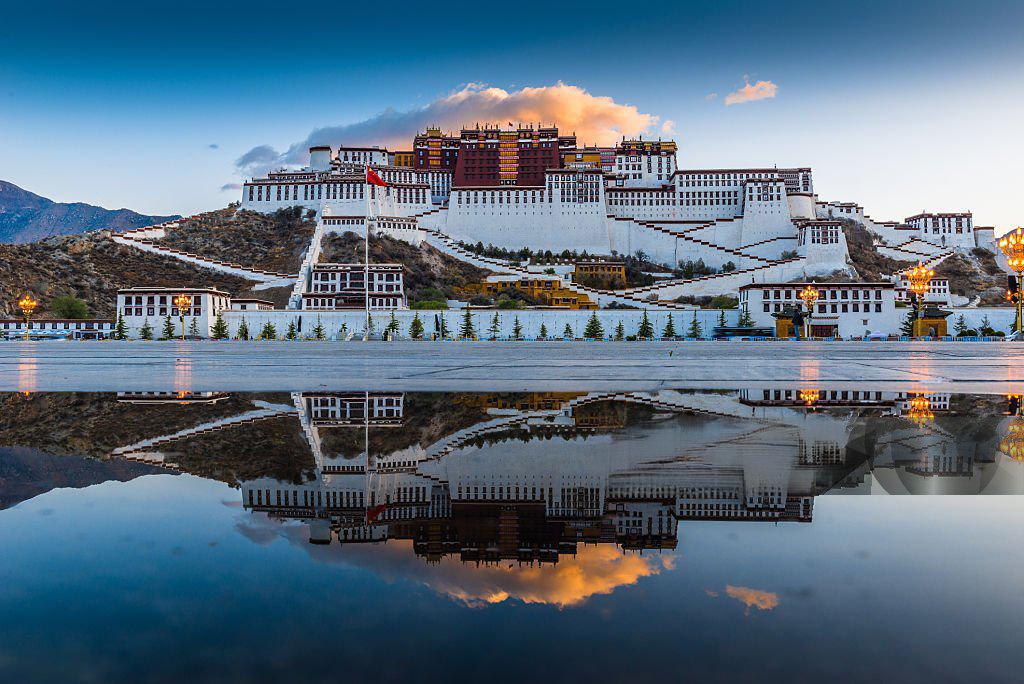
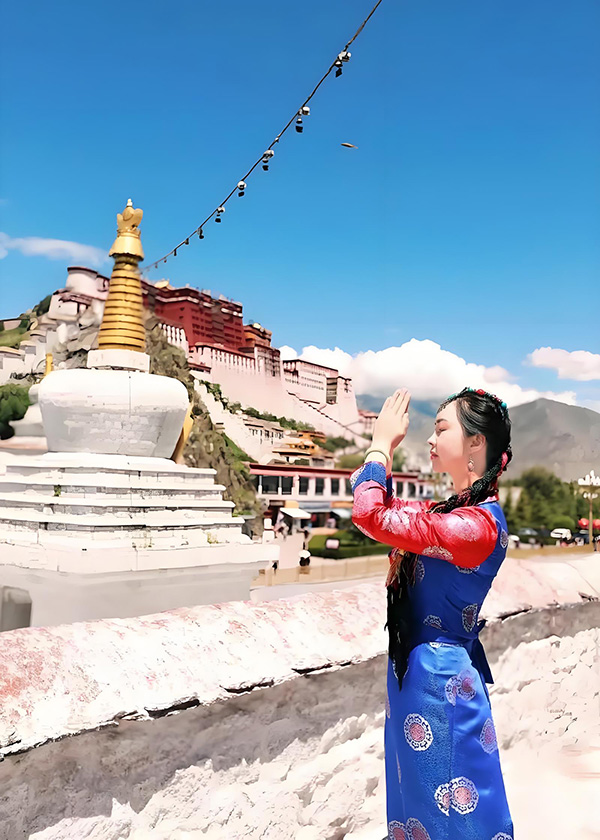
Morning explore the world wonder and pilgrimage site, The Potala Palace, in the Tibet of China previously a palace of the Dalai Lama, in the dzong-style. The palace is named after Mount Potalaka, which within Buddhist thought is the mythical abode of the bodhisattva Avalokiteśvara. The 5th Dalai Lama made decree for its construction in 1645 with advice of Konchog Chophel the Thirty-Fifth Ganden Tripa of the monastical tradition of Tsongkhapa. The Potala is on ruins of the White or Red Palace, built by decree of Songtsen Gampo in 637. It has stood for centuries as a testament to the Tibetan people and their beliefs.
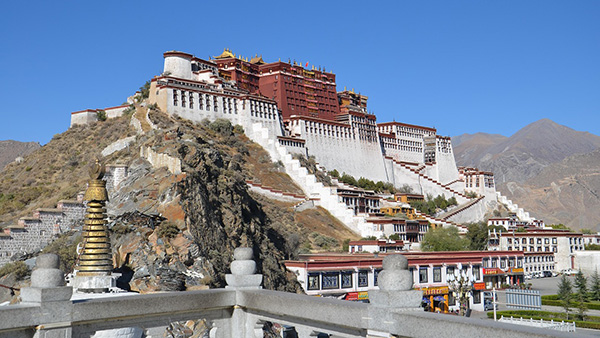
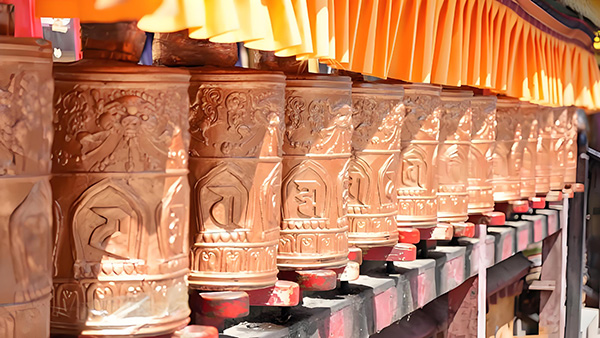
Thousands of pilgrims from around the world come every year to pay homage to this grand estate and the symbol it stands for. This amazing palace has the honor of being the highest ancient palace in the world, with its highest point reaching 3,750 meters (12,300 feet) above sea level, towering 100 meters (300 feet) above the city of Lhasa.
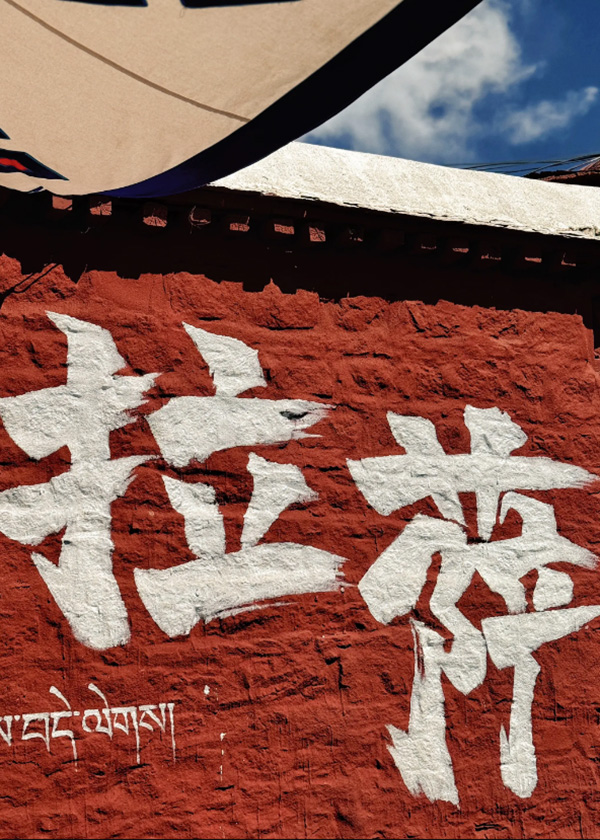
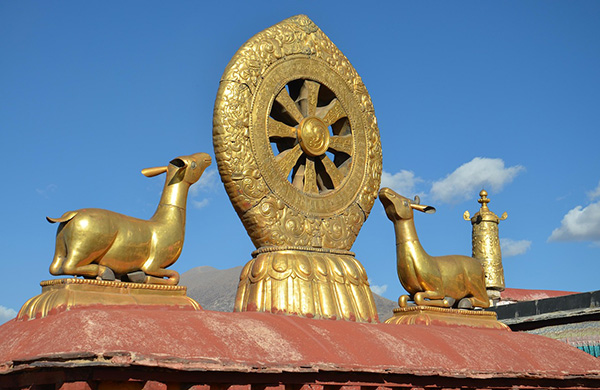
Explore the Jokhang Temple, considered the "heart of Lhasa". The Jokhang consists of a Tibetan Buddhist temple, its temple complex, and a Gelug school monastery. Located in Barkhor Square, it was built in c.640 by King Songsten Gampo to house the Jowo Mikyo Dorje, a statue of Akshobhya Buddha, brought to Tibet by his Nepalese queen, Bhrikuti. Here you will find many pilgrims worshiping, having trekked long distances from every corner of Tibet. Buddhists from all sects come to worship at this temple which help maintain its description as the "spiritual heart of the city." In 2000, the Jokhang became a UNESCO World Heritage Site as an extension of the Potala Palace, which has been a World Heritage Site since 1994.
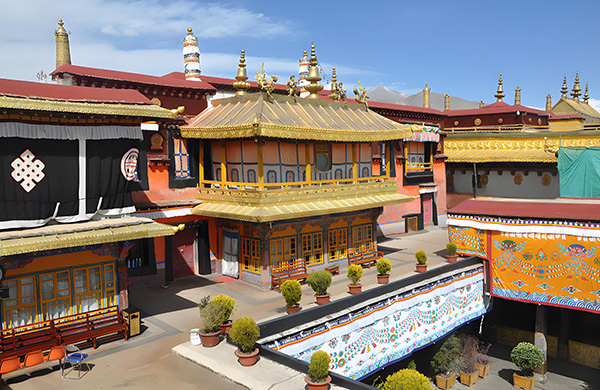
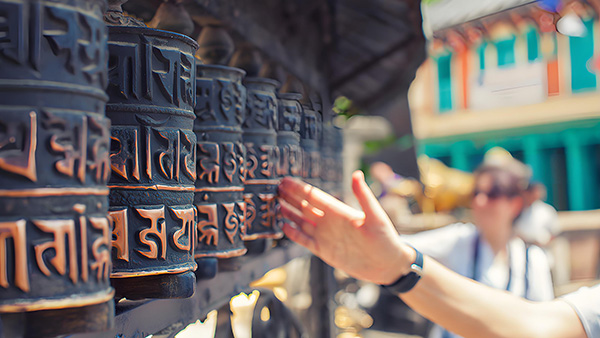
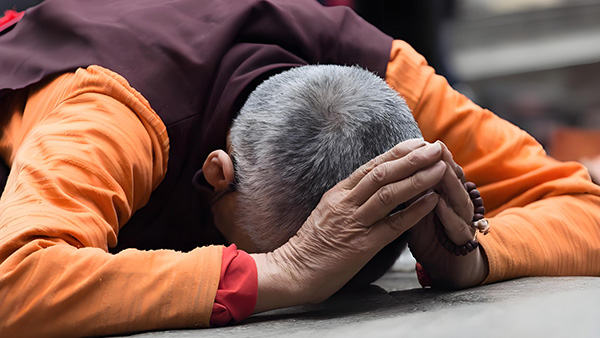
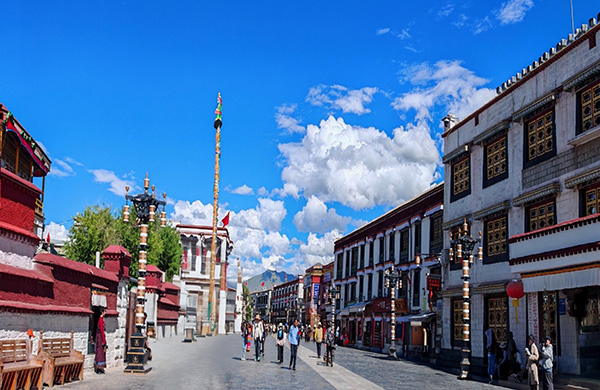
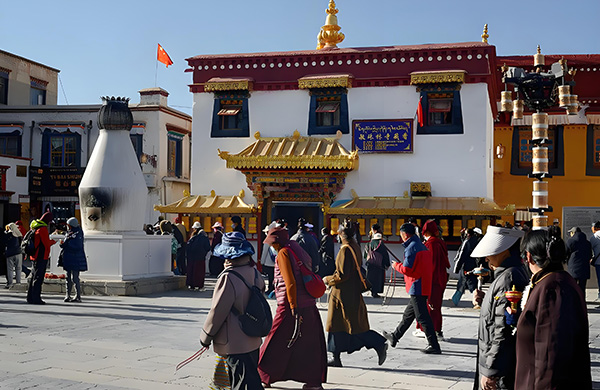
Proceed to Barkhor Street, the oldest street in Lhasa, the ancient Songtsen Gampo and Princess Wencheng led the migration to Lhasa, first built the Jokhang, where Tibetan Buddhism believers began to turn around the monastery, and gradually formed a road, became one of the three turnstiles of Lhasa in the turnstiles (the other two are Lingkhor and Woesor), the Tibetans call the Barkhor "holy road". Barkhor is a one-way street, walking on the eight silhouette, must be and the rotating direction of the cylinder, that is, clockwise walking (right around), there are many believers in the street in a step a long kneeling to turn the scriptures. Walk around a special circular pilgrimage route just as the local followers do. There will be plenty of traditional religious souvenirs for you to see, and, if desired, purchase as a reminder of your wonderful Lhasa experiences. Evening is free at leisure with dinner on own.
Today excursion to Gyantse, approx. 5-6hrs driving with the sightseeing en route.
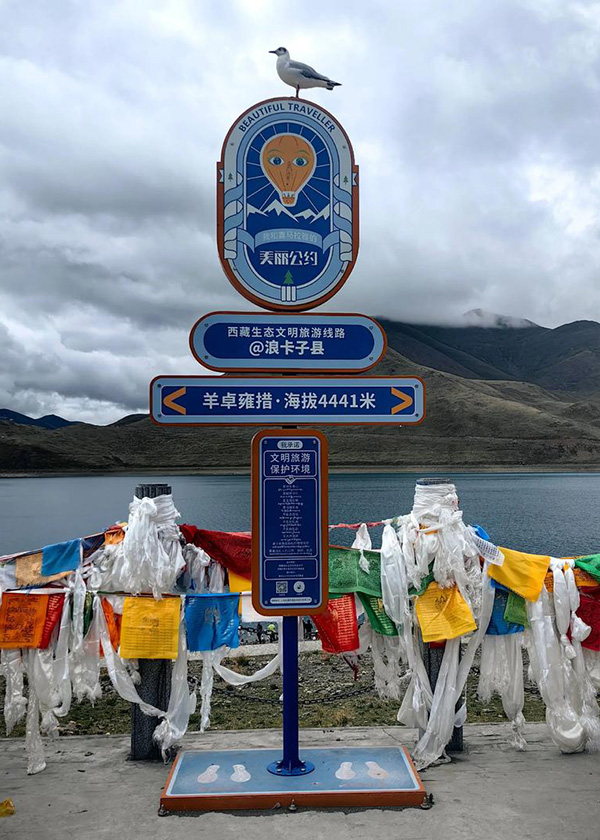
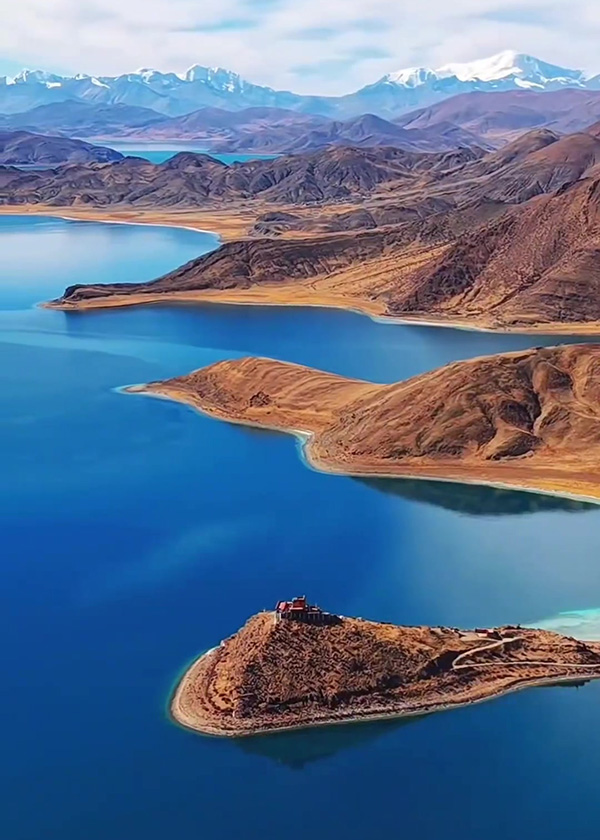
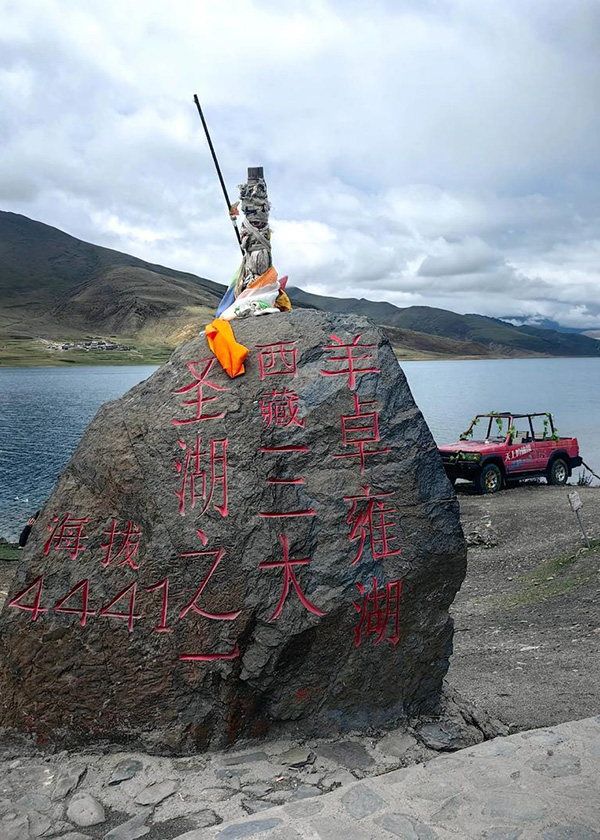
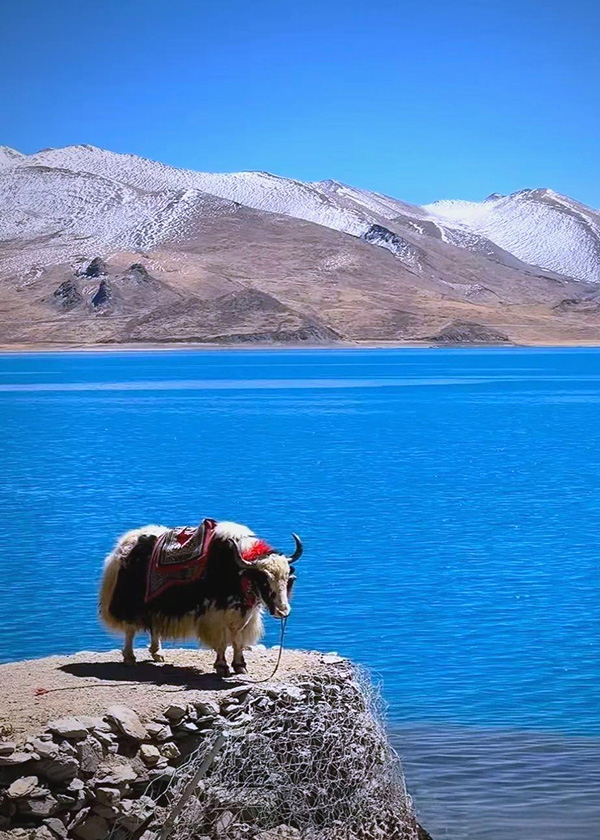
From Lhasa to Gyantse is about 264km, you will pass by Khamba-la Pass (4794m), where you will be amazed by the breathtaking glimpse of the holy Yamdrok Lake with its turquoise color and snowcapped Mt. Nyenchen Khangsar in the distance. About two-hour-distance away from Yamdrok Lake is Karola Glacier. It isn’t a big glacier, but the white glacier is spectacular from the highway, and it is close enough (about 300 yards) to walk from the highway.
Arrive at Gyantse in the late afternoon and check-in at hotel.
Start the morning to visit Kumbum Stupa and Palkhor Choede Monastery, largest stupa in Tibet, It is a multi-storied aggregate of Buddhist chapels in Tibetan Buddhism. The most famous Kumbum forms part of Palcho Monastery. The first Kumbum was founded in the fire sheep year 1427 by a Gyantse prince. It has nine lhakangs or levels, is 35 metres (115 ft) high surmounted by a golden dome, and contains 77 chapels which line its walls. Many of the statues were damaged during the Cultural Revolution but have since been replaced with clay images, though they lack the artistic merit of the originals.
The 14th century murals showing Newar and Chinese influences, survived much better. The Kumbum or great gomang ("many-doored") stupa at Gyantse is a three-dimensional mandala meant to portray the Buddhist cosmos. The Kumbum, like other mandalas, which are portrayed by a circle within a square, enables the devotee to take part in the Buddhist perception of the universe and can depict one's potential as they move through it. Mandalas are meant to aid an individual on the path to enlightenment.
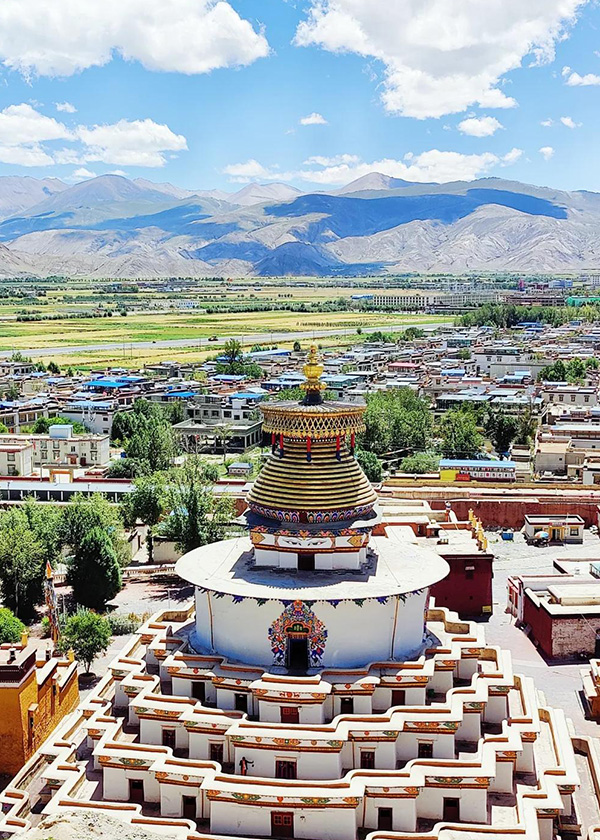
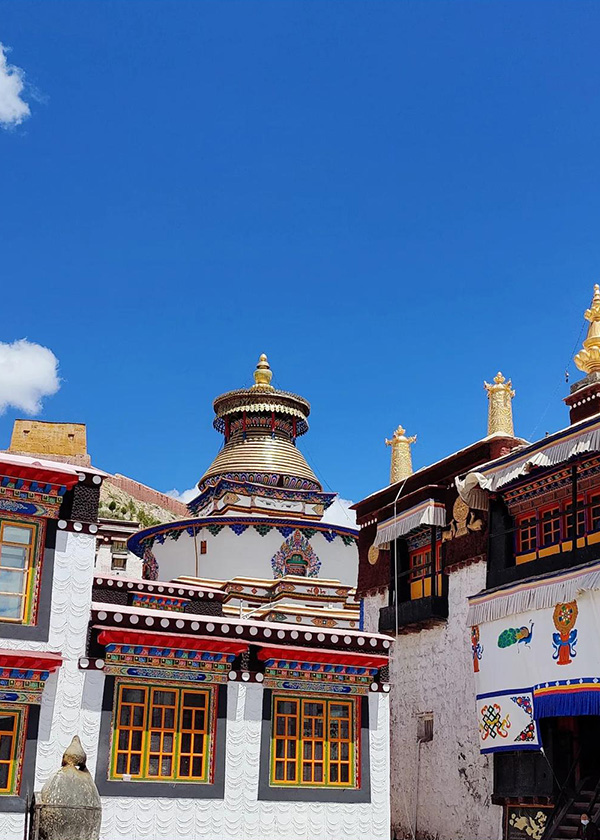
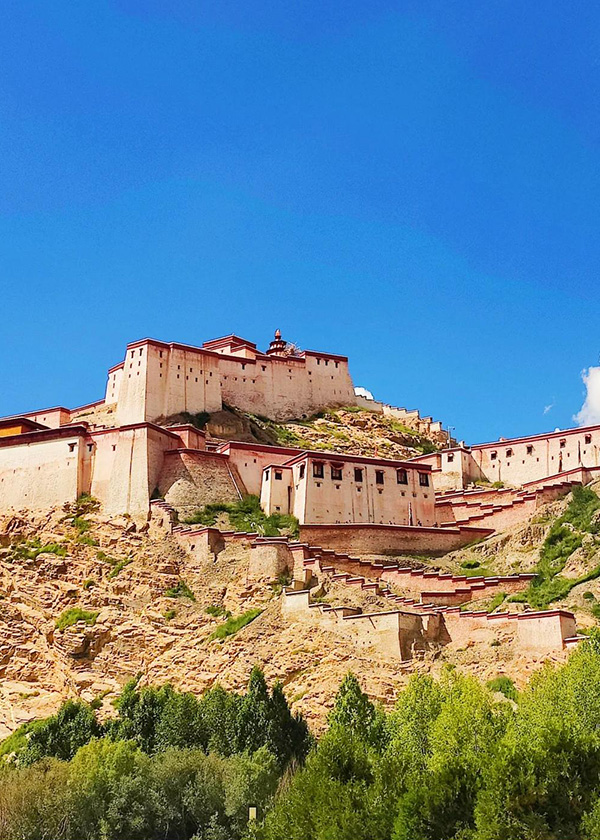
Then head to Old Town and Gyantse Castle with the Dzong Fortress, one of the best preserved dzongs in Tibet, perched high above the town of Gyantse on a huge spur of grey brown rock. According to Vitali, the fortress was constructed in 1390 and guarded the southern approaches to the Tsangpo Valley and Lhasa. The town was surrounded by a wall 3 kilometres (1.9 mi) long. The entrance is on the eastern side.
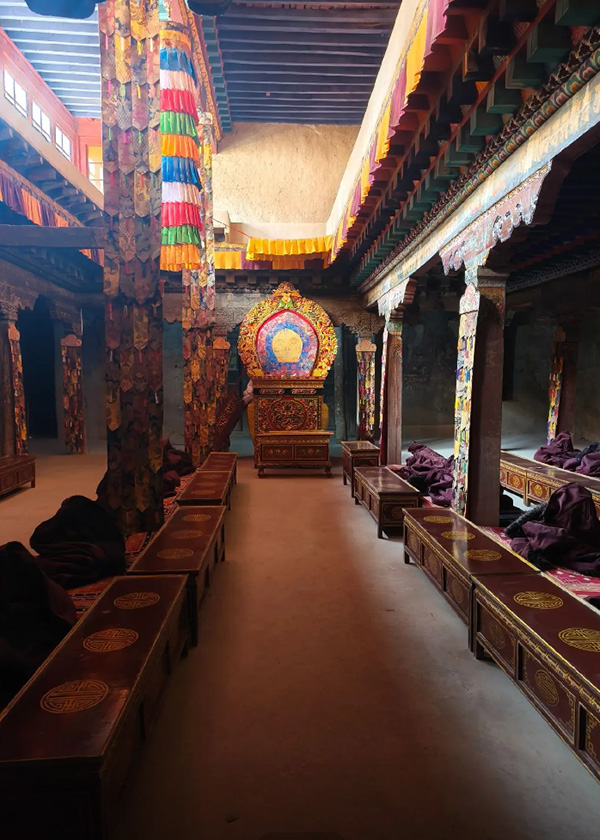
After lunch at local restaurant, drive to Shigatse (approx. 2 hours driving). Arrive Shigatse, visit the Tashilunpo Monastery, an historically and culturally important monastery in Shigatse, the second-largest city in Tibet. Founded in 1447 by the 1st Dalai Lama, it is the traditional monastic seat of the Panchen Lama. Pilgrims circumambulate the monastery on the lingkhor (sacred path) outside the walls. There are several small villages in this monastery — you will see local women sitting by the roadside and chatting, children running around, and sleepy dogs and cats lying on the ground and enjoying the sun.
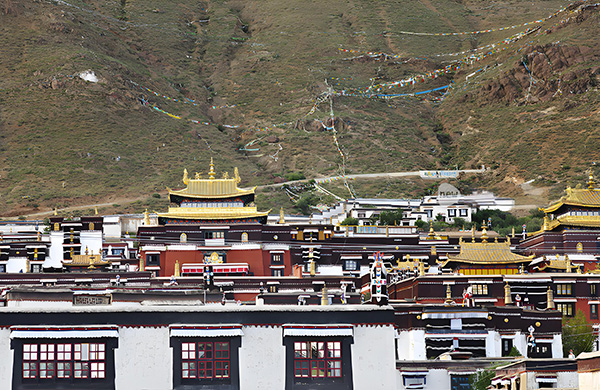
Further explore this old city in depth, feel the local's life and local culture, then drive back to Lhasa (approx. 5-6 hours driving).
Tibet is a vast land permeated with mystery and national characteristics. During the long drive, you can enjoy the fascinating natural scenery along the way. Arrive Lhasa, check in at hotel. Evening is free at leisure with dinner on own.
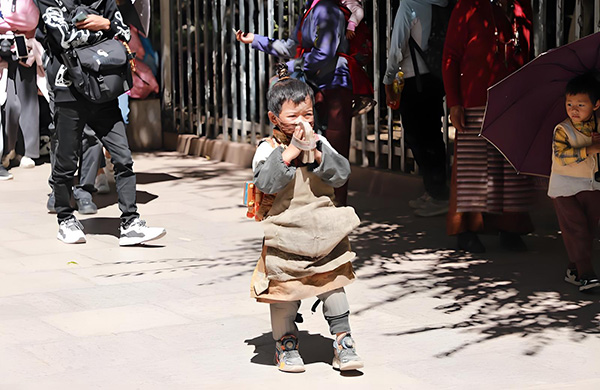
Explore the Drepung Monastery, located at the foot of Mount Gephel, is one of the "great three" Gelug monasteries of Tibet founded by Je Tsongkhapa. Drepung is the largest of all Tibetan monasteries and is located on the Gambo Utse mountain, five kilometers from the western suburb of Lhasa. Freddie Spencer Chapman reported, after his 1936–37 trip to Tibet, that Drepung was at that time the largest monastery in the world, and housed 7,700 monks, "but sometimes as many as 10,000 monks." All three were re-established in exile in the 1950s in the state of Karnataka in south-west India. Drepung and Ganden are in Mundgod and Sera is in Bylakuppe.
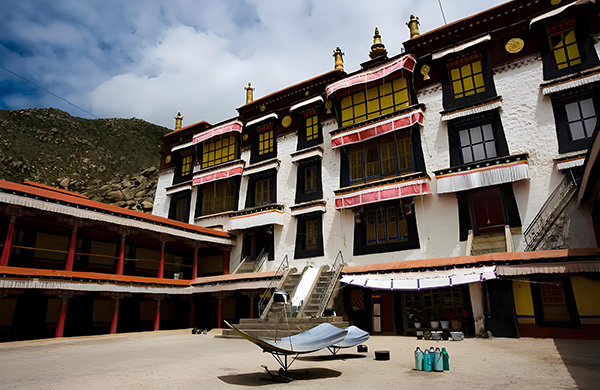
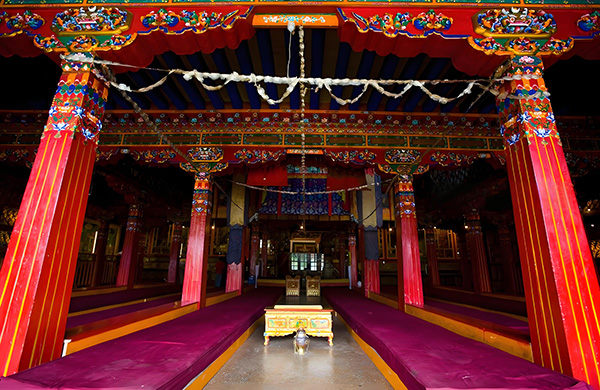
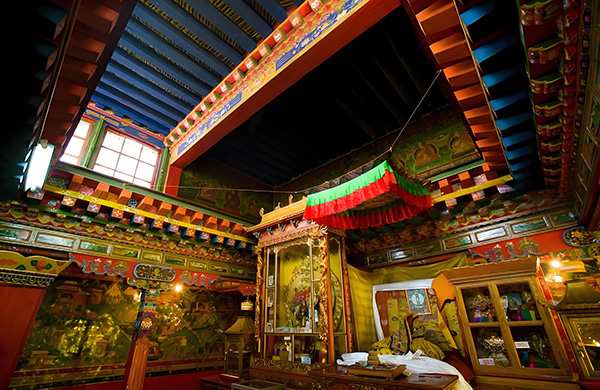
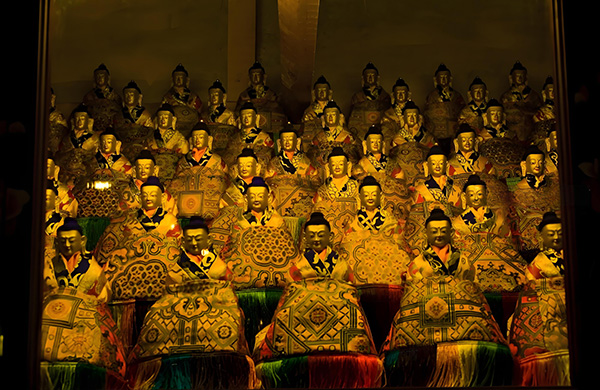
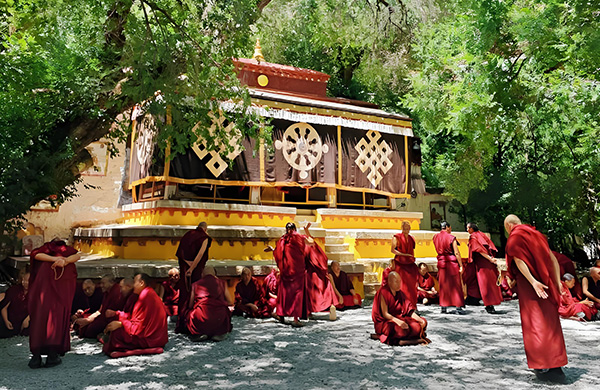
Proceed to visit the Sera Monastery, one of the "great three" Gelug university monasteries of Tibet. The origin of its name is attributed to a fact that during construction, the hill behind the monastery was covered with blooming wild roses (or "sera" in Tibetan). (An alternate etymology holds that the location that was surrounded by raspberry shrubs called 'Sewa' in Tibetan, that formed like a 'Rawa' in Tibetan, meaning "Fence".) It is responsible for some 19 hermitages, including four nunneries, which are all located in the foothills north of Lhasa, comprising a great sutra-chanting hall, a college and 32 sections. Watch the monks' debate and enjoy their special “dance” (it’s from 3:00pm to 4:30pm & not available for Sunday). Debate is a way for the monks to learn sutras and scriptures. Sera Monastery opens its debates to the public so you’ll have a chance to witness how monks debate. Evening is free at leisure with dinner on own.
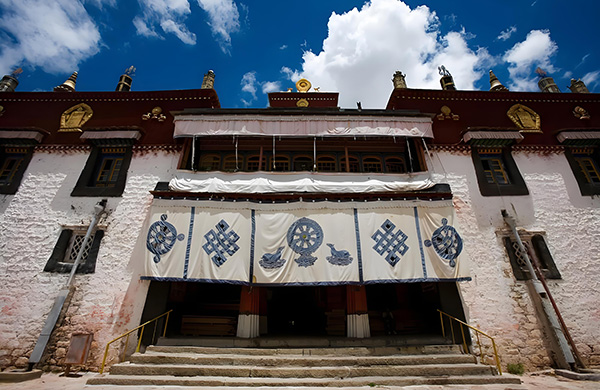
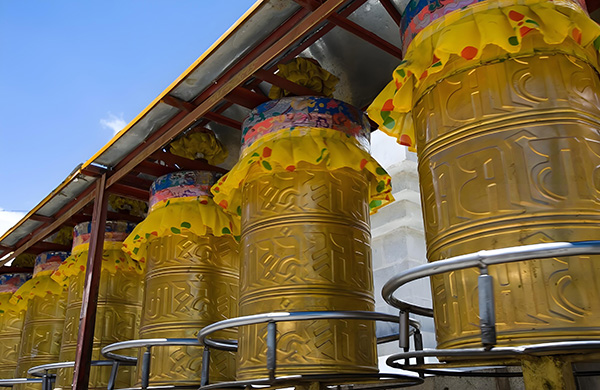
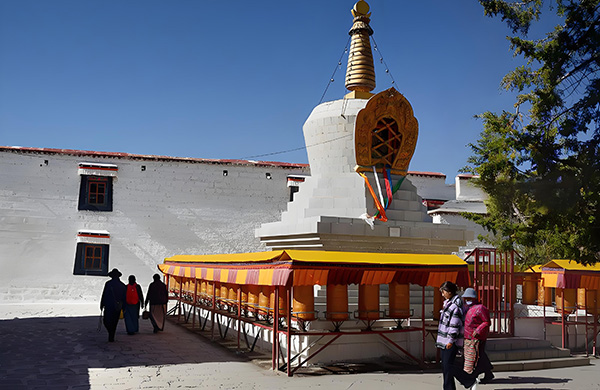
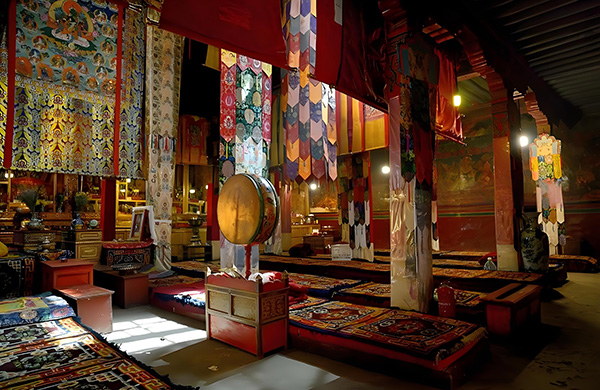
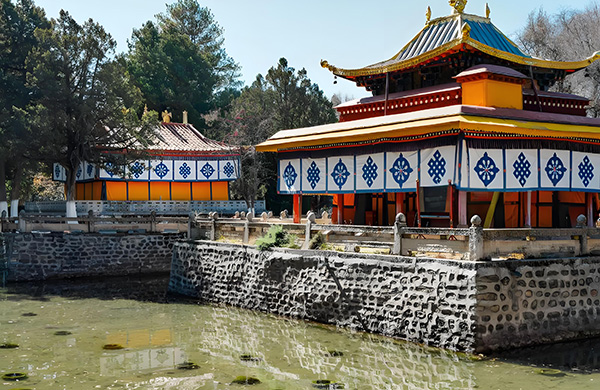
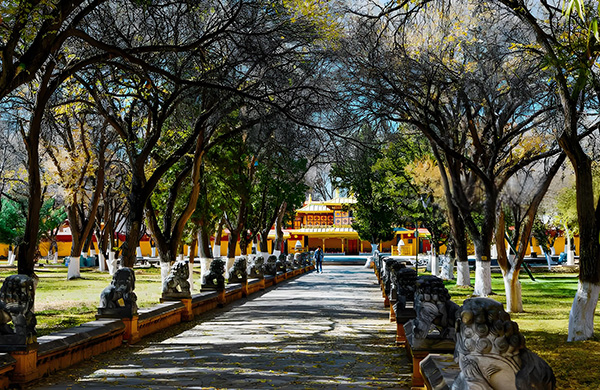
Morning visit to Norbulingka Palace, a palace and surrounding park in Lhasa, Tibet built from 1755. It served as the traditional summer residence of the successive Dalai Lamas from the 1780s up until the 14th Dalai Lama's exile in 1959. Part of the "Historic Ensemble of the Potala Palace", Norbulingka is recognized as a UNESCO World Heritage Site, and was added as an extension of this Historic Ensemble in 2001. It was built by the 7th Dalai Lama and served both as administrative centre and religious centre. It is a unique representation of Tibetan palace architecture.
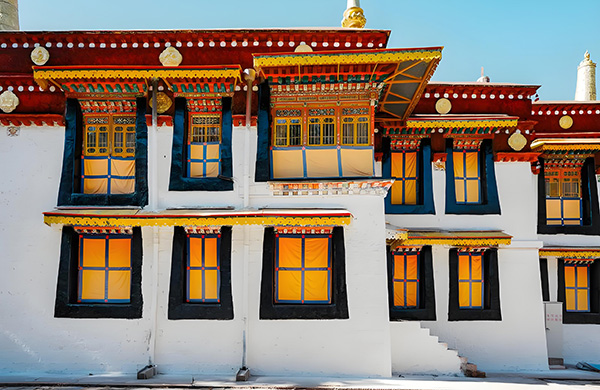
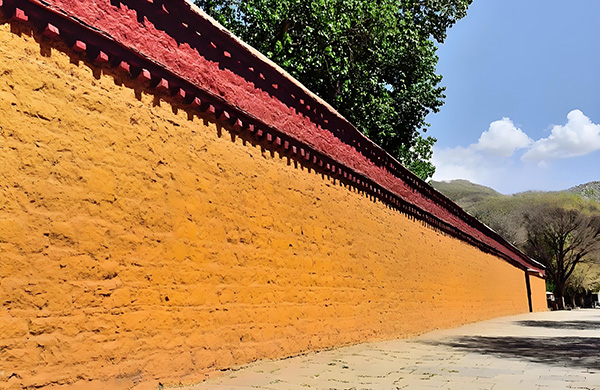
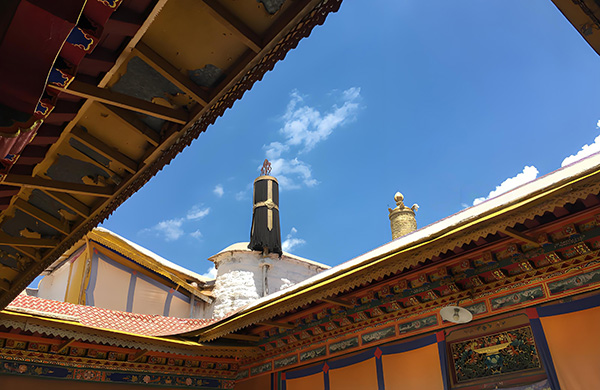
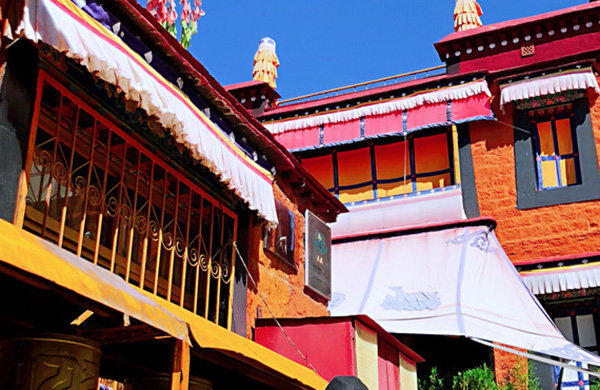
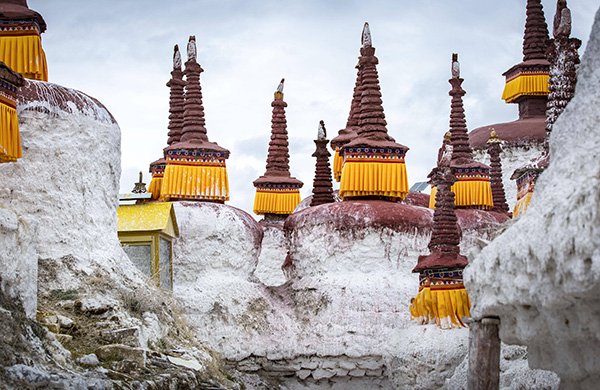
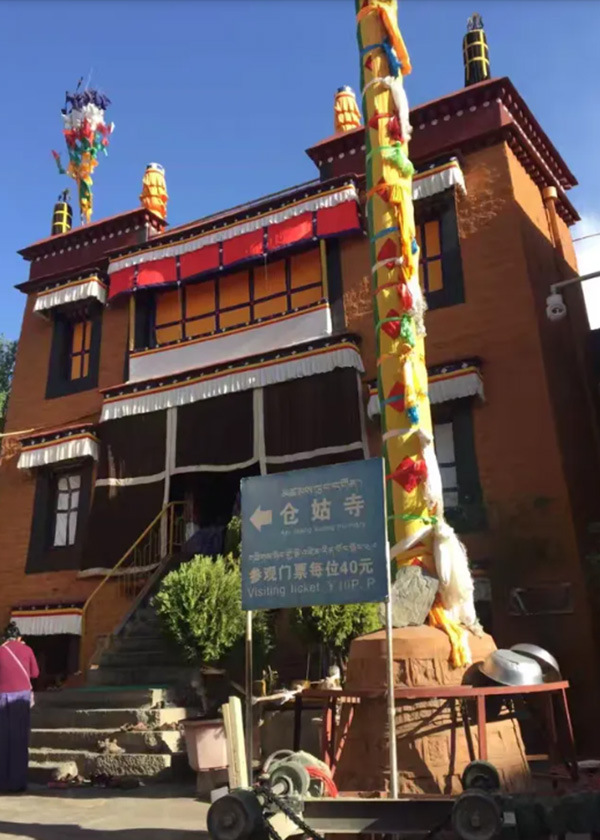
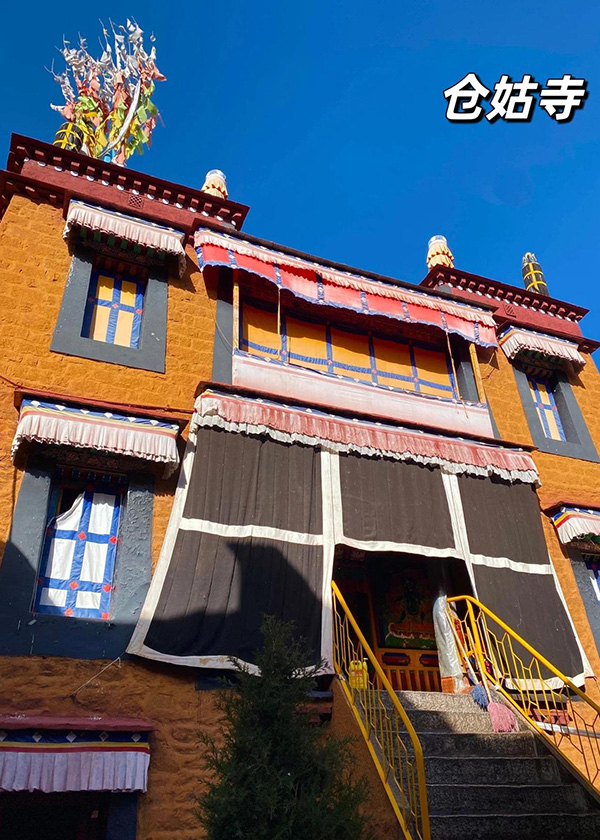
Enjoy a immersive experience to visit local Tibetan Family to learn more about the history and culture, unique architecture, savor an authentic Tibetan snacks. Then continue to visit Tsang Khung Nunnery was built in the 7th century by Songsten Gampo who used its meditation chamber. The monastery is a yellow building which lies on the street parallel and north of Chingdol Dong Lu in Lhasa. Since the 12th century the monastery has been used chiefly by Buddhist nuns.
Enjoy a local Tibetan Dinner with evening Sing & Dance Show. Feel the unique atmosphere and enjoy Tibetan traditional cuisine, live performances of a regional folklore group and much more attractions. A traditional music band will play live music and a folklore band will dance folk dances.
Say goodbye to Tibet as you will be transferred to the airport to board your flight to next destination. Have a safe flight home.